Dental Patient Retention: Why 40% Leave & How to Fix It
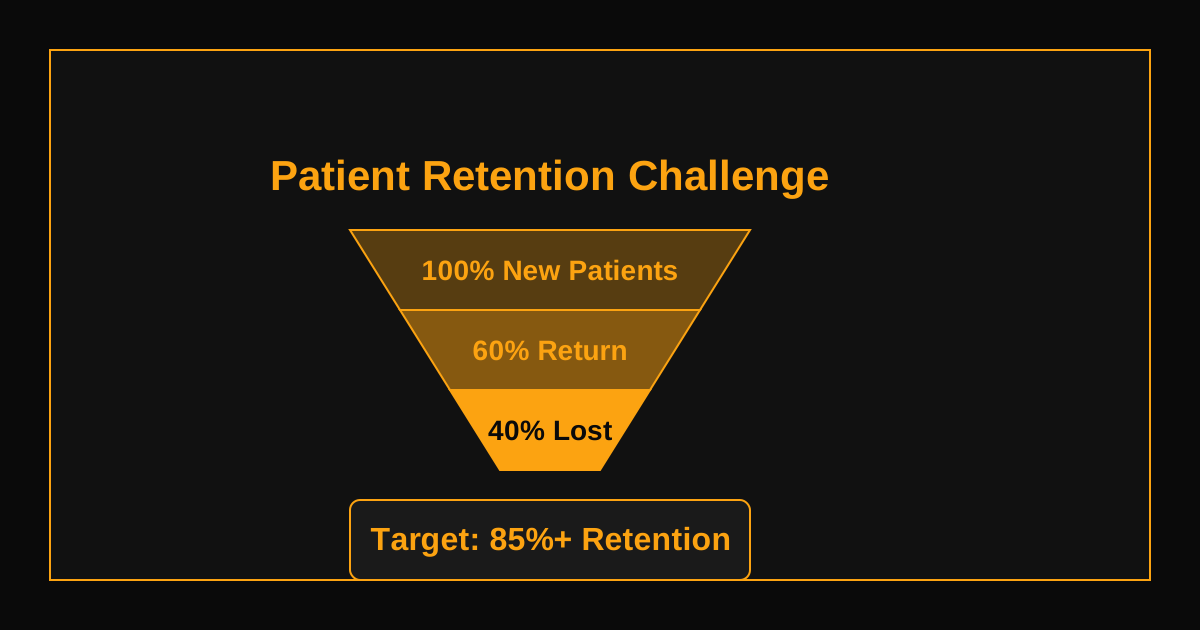
40% of new dental patients never return after their first visit. Another 42% miss their 6-month recall. Here's the retention breakdown by patient segment, the four critical windows where patients drop, and proven strategies that push retention rates from 60% to 85%+.
Quick Summary:
- • 40% of new patients don't return after initial visit
- • Only 58% of patients complete 6-month recall (should be 85%+)
- • Retention is 8.5x more cost-effective than acquisition
- • Automated recall systems achieve 62% retention vs 38% manual
- • Each retained patient worth $3,200-$8,000 lifetime value
Table of Contents
- The Patient Retention Crisis in Dentistry
- Retention Breakdown by Patient Segment
- Critical Retention Windows (Where Patients Drop)
- Why Patients Don't Come Back (Survey Data)
- Retention Improvement Strategies by Window
- Technology's Role in Retention
- FAQ: Dental Patient Retention
- 90-Day Retention Improvement Sprint
The Patient Retention Crisis in Dentistry
Most dental practices obsess over new patient acquisition while ignoring a hemorrhage of existing patients. The numbers are brutal: 40% of new patients never return after their initial visit. Only 58% complete their 6-month recall. And the practices that fix this retention crisis add $100,000-$200,000 annually without acquiring a single new patient.
6-Month Recall Completion: Only 58%
The average dental practice achieves a 58% recall completion rate. This means 42% of patients who should be scheduled for their hygiene appointment simply don't come back. They don't call to cancel. They don't switch to another practice immediately. They just... stop showing up.
Best-in-class practices push recall completion above 85%. That 27-point gap represents $75,000-$150,000 in lost hygiene revenue annually for a typical 3-operatory practice. The problem isn't that patients are dissatisfied—58% satisfaction would be a crisis. The problem is that recall systems break down quietly, and practices don't notice until the revenue impact becomes visible.
Retention Worth 8.5x More Than Acquisition
Industry benchmarks consistently show that acquiring a new dental patient costs 8-10x more than retaining an existing one. Between marketing spend ($150-$300 per new patient), front desk time (scheduling, insurance verification), and provider time (longer first appointments), new patient acquisition is expensive and time-intensive.
Retaining an existing patient requires only an effective recall system—automated reminders, consistent follow-up, and convenient scheduling. The ROI difference is staggering. A practice that improves retention by 15 percentage points (from 60% to 75%) generates the same revenue impact as adding 30-40 new patients monthly, without the acquisition cost.
LTV Gap: Loyal vs One-Time Patients
The lifetime value (LTV) of a loyal dental patient ranges from $3,200 to $8,000+ depending on treatment mix and retention duration. A patient who completes hygiene visits every 6 months for 5+ years generates:
- Hygiene revenue: $800-$1,200 annually ($4,000-$6,000 over 5 years)
- Restorative treatment: $600-$1,500 annually ($3,000-$7,500 over 5 years)
- Referrals: Average loyal patient refers 0.8 new patients over 5 years
A one-time patient generates $200-$600 (single visit + treatment), then disappears. The LTV gap between loyal and one-time patients is $2,600-$7,400. Every patient lost to poor retention is a multi-thousand-dollar revenue loss that compounds over time.
Retention Breakdown by Patient Segment
Not all patients churn at the same rate. Retention varies dramatically by patient segment, appointment type, and treatment phase. Understanding where retention breaks down by segment allows practices to deploy targeted interventions rather than generic "improve retention" initiatives.
| Patient Segment | Churn Rate | Primary Cause |
|---|---|---|
| New Patients | 40% | No second appointment scheduled |
| Established Patients | 25% | Silent drift / recall failure |
| Treatment-Plan Patients | 35% | Never schedule Phase 2 |
| Emergency-Only Patients | 65% | No preventive care relationship |
New Patients: 40% Don't Return
New patient churn happens fast. 40% of new patients complete their initial appointment (exam, x-rays, cleaning or treatment) and never return. The breakdown:
- 18% leave because no second appointment was scheduled before they left
- 12% scheduled but cancelled and never rebooked
- 10% experienced poor onboarding (long wait, billing confusion, rushed experience)
The fix is simple but rarely executed: schedule the next appointment before the patient leaves. Practices that enforce this rule reduce new patient churn from 40% to under 20%.
Established Patients: 25% Go Dormant Annually
Established patients—those who have completed 2+ hygiene visits—churn at a lower rate (25% annually), but the silent drift makes them harder to detect. They don't complain. They don't switch to a competitor immediately. They just stop scheduling.
The most common pattern: Patient completes hygiene in January. Six months pass. July recall reminder is sent. Patient intends to schedule but doesn't immediately. Another month passes. Now the patient is 7 months overdue, feels vaguely guilty about it, and avoids calling. By month 9-10, they've mentally moved on.
Treatment-Plan Patients: 35% Never Schedule Phase 2
Treatment plan acceptance is one challenge. Treatment plan completion is another. 35% of patients who accept multi-phase treatment plans complete Phase 1 and never schedule Phase 2. The reasons:
- Financial hesitation: Phase 1 cost exceeded expectations; patient delays Phase 2
- No follow-up: Practice assumes patient will call when ready; patient assumes practice will call
- Symptom relief: Phase 1 addressed immediate pain; patient no longer feels urgency
Practices that implement automated treatment plan progress check-ins (30, 60, 90 days post-Phase 1) reduce dropout from 35% to under 15%.
Emergency-Only Patients: 65% Churn Rate
Emergency-only patients—those who book only when experiencing pain or a broken tooth—have the highest churn rate at 65%. They view dental care transactionally: problem arises, they book, problem is solved, they leave. There is no preventive relationship.
Converting emergency-only patients to preventive-care patients requires deliberate effort: offering same-visit hygiene add-ons, scheduling 6-month follow-up before they leave, and framing preventive care as "avoiding the next emergency." Practices that execute this reduce emergency-only churn from 65% to 40%.
Critical Retention Windows (Where Patients Drop)
Patient churn doesn't happen randomly. It concentrates in four critical windows—predictable moments where retention systems either succeed or fail. Practices that monitor and intervene during these windows push retention rates from 60% to 85%+.
The Four Critical Windows:
- • Window 1: Between first & second visit (40% loss)
- • Window 2: Post-treatment phase completion (35% loss)
- • Window 3: 6-month recall due date (42% miss)
- • Window 4: Insurance change events (28% switch)
Window 1: Between First & Second Visit (40% Loss)
The highest-risk retention window occurs between a new patient's first and second visit. 40% of new patients never return. The breakdown by days elapsed:
- Days 0-7: 12% leave (no appointment scheduled before departure)
- Days 8-30: 15% leave (scheduled but cancel and don't rebook)
- Days 31-90: 13% leave (appointment too far out; patient forgets or loses interest)
Intervention: Schedule second appointment before patient leaves (ideally same-visit if hygiene is complete). Send appointment reminder 48 hours before. If patient cancels, trigger immediate rescheduling outreach within 24 hours.
Window 2: Post-Treatment Phase Completion (35% Loss)
Multi-phase treatment plans lose 35% of patients between phases. Phase 1 is complete. Phase 2 is presented and accepted. But weeks pass, then months, and Phase 2 never gets scheduled. The patient has moved on mentally.
Intervention: Schedule Phase 2 appointment at the end of Phase 1 visit. If patient declines to schedule immediately, trigger automated check-in sequence at 30, 60, and 90 days post-Phase 1 completion.
Window 3: 6-Month Recall Due Date (42% Miss)
42% of patients miss their 6-month recall window. They don't refuse to come back—they just don't schedule. The breakdown:
- 22% never received effective recall outreach (missed by system)
- 12% received reminder but intended to call back later and forgot
- 8% scheduled but cancelled and fell off follow-up list
Intervention: Automated recall system with 4-6 touchpoints (email, SMS, phone) starting 30 days before due date. Practices using automated recall systems achieve 62% recall completion vs 38% with manual systems.
Window 4: Insurance Change Events (28% Switch)
28% of patients switch practices during insurance change events—new employer, loss of coverage, switch to different plan. The reason isn't dissatisfaction with current practice. It's friction:
- Patient unsure if practice accepts new insurance
- Calling to verify feels like effort
- Competitor practice shows up in new insurance directory; patient defaults to new provider
Intervention: Proactive insurance verification outreach. When recall is due and insurance on file is over 12 months old, include insurance verification in recall reminder: "We accept most plans—reply with your current insurance and we'll verify coverage before your visit."
Why Patients Don't Come Back (Survey Data)
Exit surveys and patient retention studies consistently identify five primary reasons patients lapse. Understanding the distribution of these reasons allows practices to prioritize the highest-impact interventions.
| Reason for Lapse | % of Lapsed Patients | Addressable? |
|---|---|---|
| Forgot / Lost Track of Recall | 38% | Yes (recall automation) |
| Financial Concerns / Insurance Issues | 24% | Partially (payment plans) |
| Scheduling Inconvenience | 18% | Yes (expanded hours, online booking) |
| Negative Experience / Anxiety | 12% | Partially (experience improvement) |
| Moved / Changed Provider | 8% | No (structural) |
Forgot/Lost Track of Recall (38%)
The single largest retention failure mode is patients who simply forget or lose track of when they're due for hygiene. They have no negative experience with the practice. They intend to return. They just don't schedule—and the longer they wait, the more awkward it feels to call.
This is 100% addressable with automated recall systems. Practices that implement multi-touchpoint recall sequences (email + SMS + phone) reduce "forgot/lost track" churn from 38% to under 10%.
Financial Concerns/Insurance Issues (24%)
24% of lapsed patients cite cost or insurance as the primary barrier. These patients want to return but perceive dental care as unaffordable or complicated. The breakdown:
- 14%: Lost dental insurance or switched to plan that doesn't cover practice
- 6%: Received unexpected bill from prior visit and avoiding return
- 4%: Cannot afford out-of-pocket hygiene or treatment costs
Proactive financial coordination—offering payment plans, verifying insurance before visit, transparent cost estimates—reduces financial-driven churn from 24% to 12-14%.
Scheduling Inconvenience (18%)
18% of patients lapse because scheduling feels inconvenient. They call during business hours and get voicemail. They're told no appointments are available for 6-8 weeks. They work 9-5 and the practice doesn't offer evening or Saturday hours. The practice doesn't offer online booking, so scheduling requires a phone call during work hours.
Practices that offer expanded hours (one evening per week, alternate Saturdays) and online booking reduce scheduling-driven churn from 18% to under 8%.
Negative Experience/Anxiety (12%)
12% of lapsed patients had a negative experience or struggle with dental anxiety. The experience issues range from long wait times and billing disputes to feeling rushed or dismissed by the provider. Anxiety-driven lapse is more complex—patients want care but avoid it due to fear or discomfort.
Experience-driven churn requires operational excellence: minimizing wait times, empathetic communication, transparent billing. Anxiety-driven churn benefits from sedation options and gentle care protocols. These interventions reduce experience/anxiety churn from 12% to 6-8%.
Moved/Changed Provider (8%)
8% of lapsed patients moved to a new city or switched to a provider closer to home/work. This is largely structural and not addressable through retention systems. However, some practices reduce this category by offering multiple locations or partnering with affiliated practices in nearby cities to facilitate referrals rather than complete loss.
Retention Improvement Strategies by Window
Generic "improve patient retention" advice fails because retention breaks down differently in each critical window. Here are targeted interventions matched to each window's specific failure mode.
Post-Visit Follow-Up Automation
Target Window: Between first & second visit (addresses 40% new patient churn)
Implementation: Automated sequence triggered when new patient completes first visit:
- Day 1: Thank you email with recap of visit and next steps
- Day 2: If no second appointment scheduled, SMS with booking link
- Day 7: If still no appointment, personal phone call from front desk
- Day 14: Final outreach offering specific available times
Practices implementing this sequence reduce new patient churn from 40% to 18-22%.
Pre-Recall Outreach Campaigns
Target Window: 6-month recall due date (addresses 42% recall miss rate)
Implementation: Multi-touchpoint recall sequence starting 30 days before due date:
- Day -30: Email reminder with online booking link
- Day -14: SMS with available appointment times
- Day -7: Phone call if no response to digital outreach
- Day 0 (due date): Final SMS: "You're due for cleaning—tap to schedule"
- Day +14 (overdue): Reactivation outreach begins
Practices using automated pre-recall campaigns achieve 78-85% recall completion vs 58% industry average.
Treatment Plan Progress Check-Ins
Target Window: Post-treatment phase completion (addresses 35% treatment plan dropout)
Implementation: Automated check-in sequence for patients with accepted multi-phase treatment plans:
- 30 days post-Phase 1: "How are you feeling? Ready to schedule Phase 2?"
- 60 days: Reminder of remaining treatment with financial options
- 90 days: Personal call from treatment coordinator
Practices using treatment plan check-ins reduce Phase 2 dropout from 35% to under 15%.
Financial Coordination & Payment Plans
Target Issue: Financial concerns driving 24% of lapsed patients
Implementation:
- Offer in-house payment plans for treatment over $500
- Verify insurance before visit (eliminates surprise bills)
- Transparent cost estimates before treatment begins
- Monthly membership plans for uninsured patients ($30-40/month for preventive care)
Practices with robust financial coordination reduce cost-driven churn from 24% to 12-14%.
Experience Excellence & Anxiety Management
Target Issue: Negative experience / anxiety driving 12% of lapsed patients
Implementation:
- Track and minimize wait times (target: under 10 minutes from check-in to chair)
- Empathetic communication training for entire team
- Sedation options for anxious patients
- Post-visit follow-up for patients flagged as anxious
Technology's Role in Retention
Manual retention systems—front desk calling through recall lists, tracking treatment plan follow-ups in spreadsheets—break down under scale. Technology doesn't replace human touch; it ensures human touch happens consistently at the right moments.
Automated Recall Systems: 62% vs 38% Manual
Practices using automated recall systems achieve 62% recall completion rates. Practices relying on manual front desk calling achieve 38%. The gap isn't about automation being "better" at convincing patients—it's about consistency and coverage.
Manual systems fail when:
- Front desk is overwhelmed (busy week = recall calls skipped)
- Patients don't answer phone (voicemails often ignored)
- Follow-up falls through cracks (patient says "I'll call back" and doesn't)
Automated systems ensure every overdue patient receives 4-6 touchpoints across email, SMS, and phone—regardless of how busy the practice is.
SMS Reminders: 85% Open Rate
SMS appointment reminders achieve 85% open rates within 3 minutes of delivery. Email reminders achieve 20-25% open rates. Phone calls reach 40-50% of patients (voicemail for the rest). SMS's immediacy and high open rate make it the most effective channel for time-sensitive reminders.
Best practices for SMS retention:
- 48-hour appointment reminder (reduces no-shows from 12% to 4%)
- Recall due date reminder with booking link
- Post-visit thank you with next appointment details
Patient Portal Engagement: 22% Retention Lift
Practices with active patient portal usage (over 40% of patients use portal for scheduling, forms, or communication) see 22% higher retention rates than practices without portals. The mechanism:
- Portals reduce scheduling friction (book online anytime vs calling during business hours)
- Portal users receive automated appointment reminders and recall notifications
- Digital forms and pre-visit communication reduce wait times and improve experience
The challenge: most dental practices have portals, but under 30% patient adoption. Driving adoption requires onboarding new patients to portal during first visit and incentivizing usage (e.g., "Book online and skip the phone queue").
AI Follow-Up: Personalized at Scale
AI-powered retention systems combine automation's consistency with personalization's effectiveness. Modern AI handles:
- Recall outreach: Personalized messages based on patient history, preferred contact channel, and past response patterns
- Treatment plan follow-up: Automated check-ins that reference specific treatment phases and patient concerns
- Reactivation campaigns: Targeted outreach to dormant patients with offers matched to their lapse reason
- After-hours responses: Patients who call/text after hours receive immediate AI response with booking options
Practices using AI retention systems see 18-25% improvement in recall rates and 30-40% reduction in patient reactivation costs compared to manual systems.
FAQ: Dental Patient Retention
What is a good patient retention rate for dental practices?
Industry average is 60-65% annual retention. Best-in-class practices achieve 80-85%+. Retention rate is calculated as: (# of patients with 2+ visits in 12 months) / (total active patients 12 months ago). A practice with under 60% retention is losing patients faster than it can replace them through acquisition.
How much does it cost to retain vs acquire a dental patient?
Acquiring a new patient costs $150-$300 (marketing, front desk time, longer appointments). Retaining an existing patient costs $18-$35 (recall system, reminders, follow-up). Retention is 8-10x more cost-effective than acquisition. A 10% improvement in retention has the same revenue impact as adding 30-40 new patients monthly.
Why do 40% of new dental patients never return?
The primary reasons: 18% leave because no second appointment was scheduled before departure, 12% scheduled but cancelled and never rebooked, 10% had poor onboarding experience (long wait, billing confusion). The fix: schedule next appointment before patient leaves and implement automated post-visit follow-up sequence.
What's the difference between recall rate and retention rate?
Recall rate: % of patients due for 6-month hygiene who actually schedule and complete visit (industry average: 58%, target: 85%+). Retention rate: % of active patients who remain active over 12-month period (average: 60-65%, target: 80%+). High recall rate drives high retention rate—but retention also includes treatment plan completion, new patient return, and reactivation.
How do automated recall systems improve retention?
Automated recall systems achieve 62% recall completion vs 38% for manual calling. The difference: automation ensures every overdue patient receives 4-6 touchpoints (email, SMS, phone) regardless of how busy the practice is. Manual systems break down when front desk is overwhelmed or patients don't answer phone calls. Automation provides consistent coverage at scale.
90-Day Retention Improvement Sprint
Improving retention from 60% to 75%+ doesn't require a multi-year transformation. Here's a 90-day sprint that addresses the highest-impact retention windows:
Month 1: Baseline & Quick Wins
- Week 1: Calculate current retention rate and recall completion rate. Identify highest-churn patient segments.
- Week 2: Implement "schedule next appointment before departure" rule for new patients. Track compliance.
- Week 3: Launch automated SMS appointment reminders (reduces no-shows 8-12%).
- Week 4: Create post-visit follow-up sequence for new patients (email Day 1, SMS Day 2, call Day 7).
Month 2: Recall System Overhaul
- Week 5: Audit current recall process. Identify patients 7+ months overdue (reactivation candidates).
- Week 6: Implement automated pre-recall campaign (email at -30 days, SMS at -14 days, call at -7 days).
- Week 7: Launch reactivation campaign for 7+ months overdue patients (tiered outreach based on lapse duration).
- Week 8: Measure recall completion rate improvement. Target: 70%+ (up from 58% baseline).
Month 3: Treatment Plan & Financial Systems
- Week 9: Implement treatment plan progress check-ins (30/60/90 days post-Phase 1).
- Week 10: Launch in-house payment plans for treatment over $500. Train team on presenting options.
- Week 11: Add insurance verification to recall reminders ("Reply with current insurance for quick verification").
- Week 12: Measure retention rate improvement. Target: 70-75% (up from 60% baseline). Calculate revenue impact.
Expected 90-Day Results:
- • Retention rate: 60% → 70-75% (+10-15 points)
- • Recall completion: 58% → 70-78% (+12-20 points)
- • New patient return rate: 60% → 78-82% (+18-22 points)
- • Revenue impact: +$75,000-$150,000 annualized (3-operatory practice)
Turn 40% Patient Loss Into 85% Retention
Slexium's AI-powered retention system handles recall outreach, treatment plan follow-ups, and reactivation campaigns—automatically. Practices using Slexium improve retention rates by 18-25% within 90 days.
Related Articles
Patient Reactivation ROI
Dormant patients are worth $120K-$280K. Here's the 90-day reactivation system.
Missed Calls Revenue Impact
18% of calls go to voicemail. That's $280K annually. Here's how to capture it.
AI vs Human Receptionist
Full cost comparison: AI at $247/mo vs receptionist at $3,200/mo + benefits.